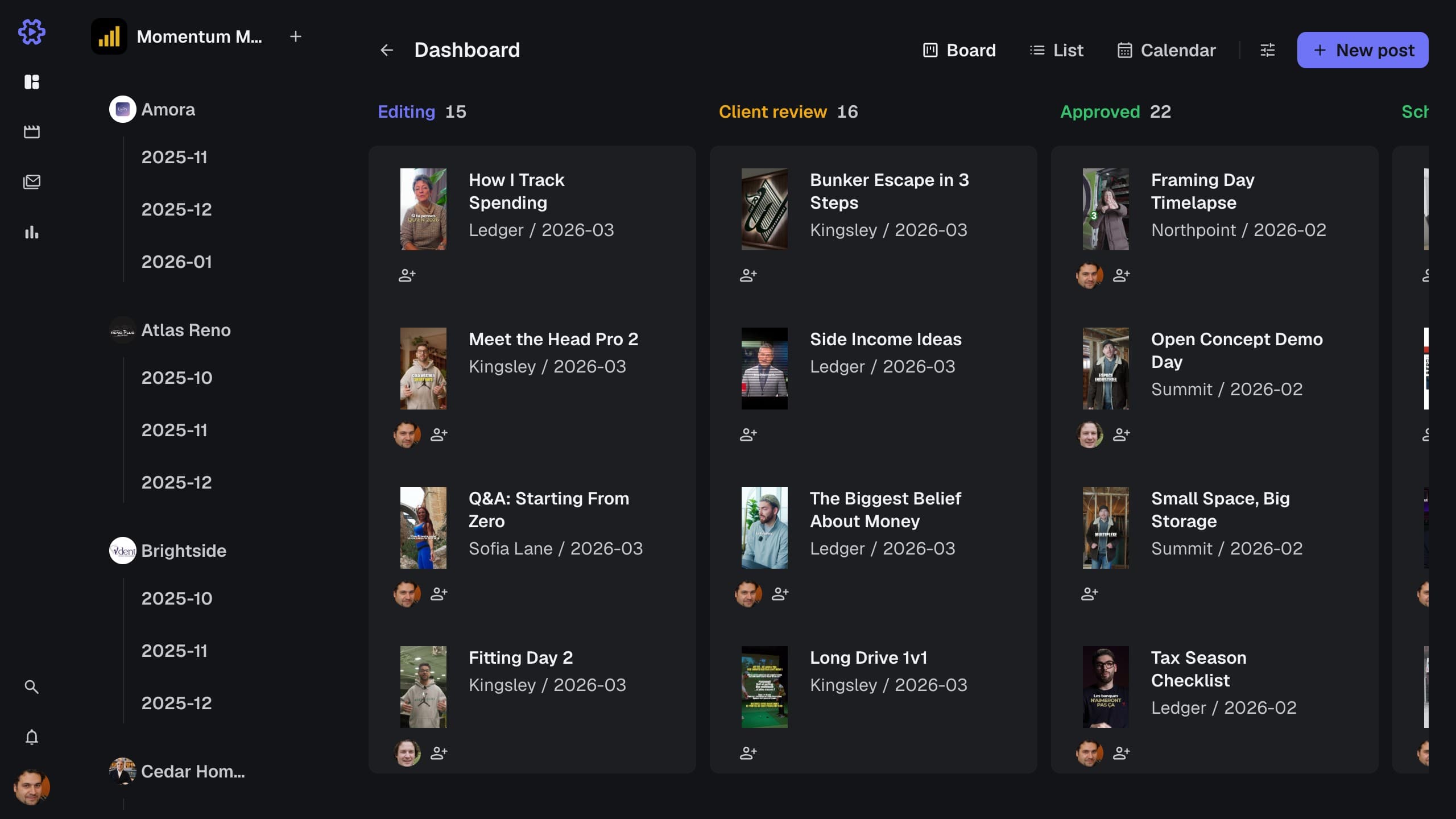
Every piece of content, and who has it right now.
Built for more than one client.
A workspace per brand is how tools force you to work. This isn't that.
Clients, then projects, then content
The hierarchy is part of the data model, not a tag you remember to apply. Every piece of content belongs to a project and every project to a client, so nothing is ever loose in a shared workspace.
Board, list and calendar over one queue
The same content, three ways. Drag a card between stages on the board, scan the list when you want density, or open the calendar when you plan the week.
Assign the work
Put one or more people on a piece of content so it is obvious who is holding it. Everyone sees the same assignment, with no separate spreadsheet of who is doing what.
Four dates that matter
Deadline, recording date, review date and publish date live on the content itself, and each platform can override the publish time when a post needs to go out separately.
Filter to one client, or see them all
Focus on one brand while you work, then pull back to the whole roster when you plan. Same data, one control.
Clients only see themselves
Invite a client and they get their own work and nothing else. Editors are scoped by a per client access list, so a new editor starts with access to nothing until you say otherwise.
Roles, enforced where it counts.
Hiding a menu item isn't access control.
Five roles
Owner, manager, social media manager, editor and client. Each one gets a different set of actions, checked on the server every time, not just a different looking sidebar.
Scoped by client
A client sees their own work. An editor sees only the clients whose access list names them. Both are resolved once and applied to every read, so there is no screen where the scope is forgotten.
Working with an agency team? See how agencies use it.