
Creative workflow management that keeps briefs clear and deadlines intact
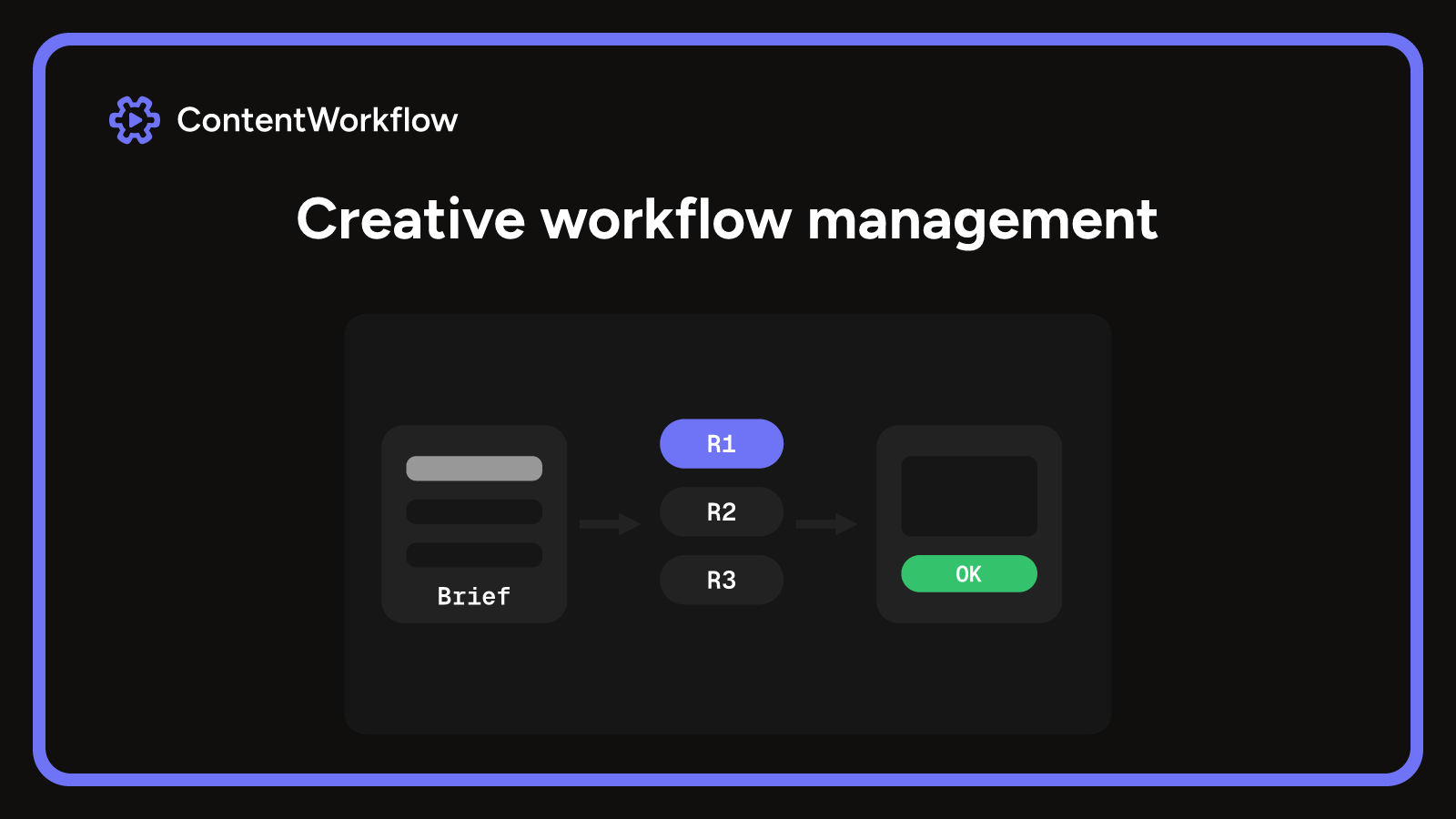
Creative work is judged, not checked, so creative workflow management needs its own controls. Sign off a brief that names the outcome, mandatory elements and one decision owner. Count revision rounds, run compliance before creative review, publish only the approved numbered file and cap open pieces per person. A board is enough for a few clients.
What creative workflow management is
Creative workflow management is the way a team moves a creative piece from request to published file: who briefs it, who makes it, who reviews it, who approves it and what ships. It sits inside what larger companies call creative operations, which also covers budgets, staffing and tooling. For an agency, it is the part that decides whether a client piece finishes on the date promised.
It differs from general project management because the output is judged, not checked. A task list tells you the video is "done" when the export exists. It cannot tell you whether the client will accept it, so the workflow has to plan for opinions, revisions and approval authority as well as dates.
The sequence is the same for most content and design work. Each phase has a section below.
| Phase | What it means for a content team |
|---|---|
| Brief | A signed brief with the outcome, mandatory elements and one decision owner |
| Schedule | A delivery date and a round count agreed before work starts |
| Produce | A draft made within the cap on open pieces per person |
| Review | One consolidated set of notes per round, in actionable form |
| Approve | Compliance first, then the decision owner signs off a named numbered file |
| Publish | The approved file goes out, not the latest upload |
| Debrief | A short look back at what caused extra rounds, fed into the next brief |
For agency client work, all seven apply, but a freelancer with one client can merge schedule and brief and skip the formal debrief.
Creative work is judged, so the controls differ
There is no clear pass condition, so disagreement is normal. Revisions are the usual path, so they need planning. And the brief decides most of the outcome, because it is the only thing the creative and the client share before anything exists.
Write the brief as the contract
Most extra rounds come from a brief that skipped a decision, so the designer guessed and the client guessed differently. A usable brief is short, written down and signed off before anyone opens a design tool. It holds eight things.
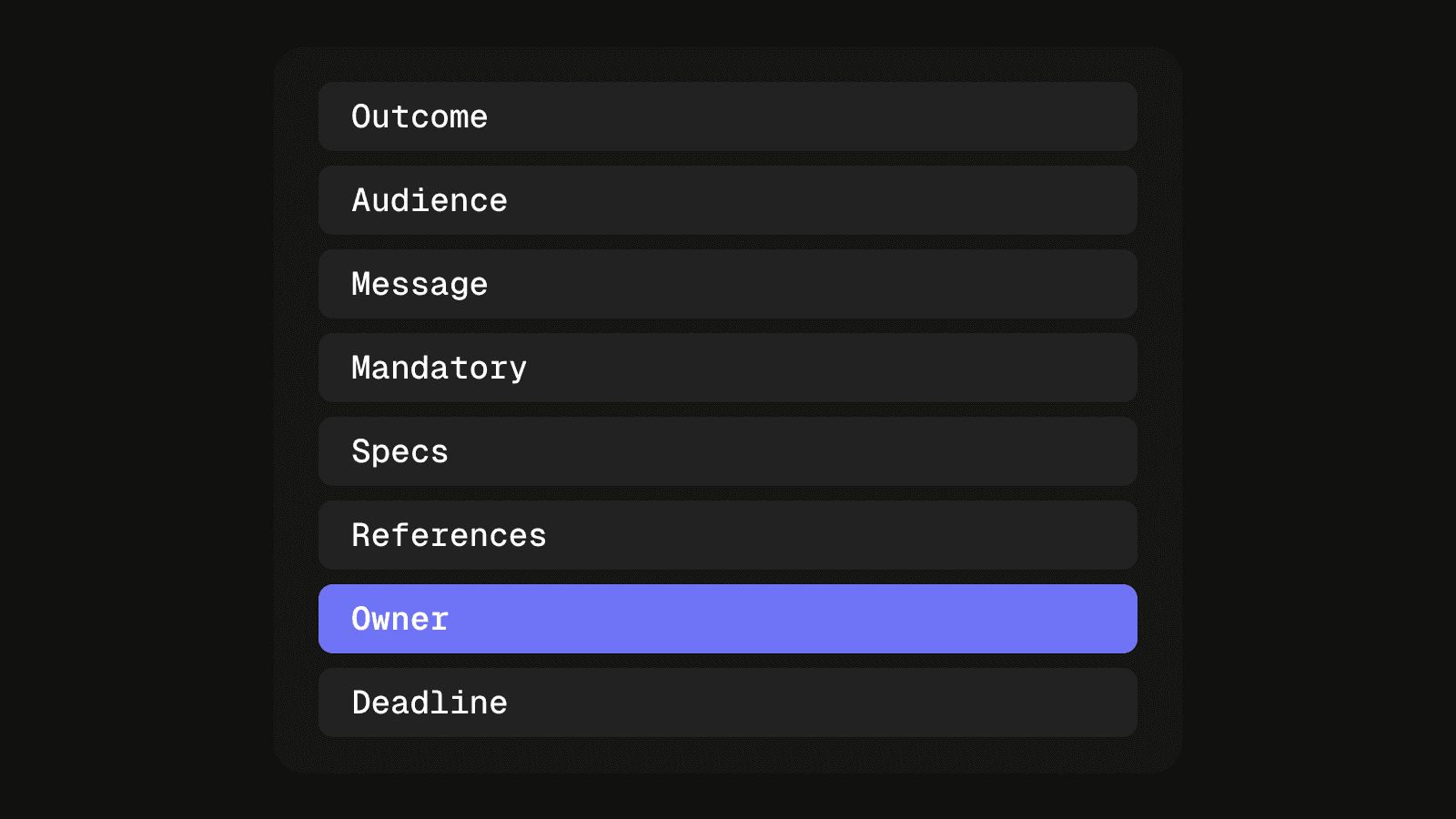
- The outcome. "Get more demo sign-ups from the launch post" is an outcome. "Something for the launch" is not.
- The audience and the moment. Who sees it, where, and what they are doing. A feed placement and a landing page header are different jobs.
- The one message. If the brief has three, the piece will carry three and look busy.
- Mandatory elements. Logo lockup, legal line, spelling of the product name, offer terms. Anything fixed goes here so it never returns as feedback.
- Format and specs. Dimensions, duration and file type per destination. Link the social media video specs instead of retyping them.
- References and things to avoid. Two or three examples with a line on what works in each.
- Decision owner. One named person approves for the client. Otherwise approval comes from whoever replied last.
- Deadline and rounds. The date the approved piece is needed and the number of rounds included.
The test: could a competent person who never spoke to the client produce something they accept first time? If not, the missing decision belongs in the brief, not in a chat message after the first draft.
Bound revisions by counting rounds
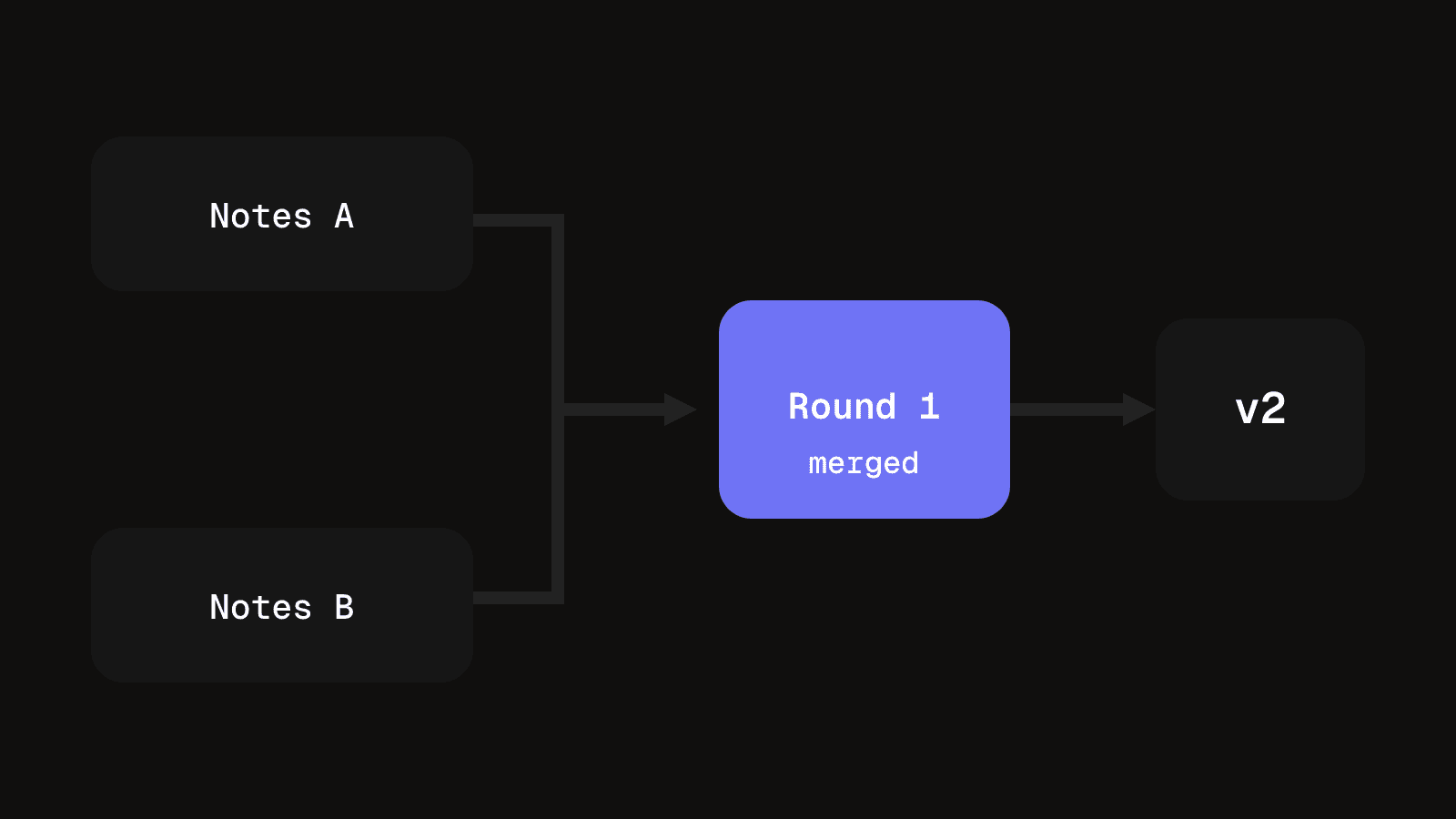
A round is one consolidated set of notes followed by one new version. Two people sending separate notes on the same day make one round if the changes land in one version. A new idea that changes the message is a new brief, priced or scheduled as one.
Write the number into the agreement before work starts. Short-form work usually needs fewer rounds than a long film. What matters is that both sides know it, so an extra round becomes a conversation rather than a grievance.
Feedback is actionable when it names the element, the problem against the brief and the outcome wanted. "Make it pop" names none. "The price in the lower third is hard to read on a phone, so make it larger" can be acted on. Anything that cannot be put in that form goes back to the sender as a question, and notes that change the brief are logged as scope changes. For timestamped video notes, see the client video review process.
| Problem | The rule that fixes it |
|---|---|
| The brief is a chat message and a link | One signed brief per piece, approved before work starts |
| Revisions never end | A round count in the agreement, extra rounds priced or scheduled |
| Feedback says "make it pop" | Every change request names the element, the problem and the outcome |
| Compliance problems surface after the look is approved | Run the compliance checklist first, on the near-final version |
| The wrong file gets posted | One named final per format, version numbers never reused |
| Nobody knows who can approve | One decision owner per piece, recorded on the piece |
| Everyone is busy and nothing finishes | A cap on open pieces per person |
Check compliance before the client judges the look
Creative review asks whether the piece is good. Compliance asks whether it is allowed, and mixing the two is how a piece gets approved twice. Compliance is a yes or no checklist: legal line present, each claim backed up, trademarks correct, platform format met, music licensed, anyone shown has agreed to appear. None of it depends on taste, so do not argue it as if it did.
If it runs after creative approval, a client can spend a round judging something that cannot ship as drawn. A failure reopens the file, and only the changed part goes back through creative review unless the composition moves.
Publish from the record, not from a download
The design is approved, then a file with the wrong name, size or version gets uploaded and nobody notices until it is live. The fixes concern files, not design.
- Approval names the file. "Approved" with no version and format attached is not an approval.
- Never overwrite an export. The approved file stays after a newer one exists.
- Keep the source with the export. A resize or a changed legal line should not restart the piece.
- One source of truth. A copy in the poster's downloads folder is a second one. Publish from the linked approved file.
A media review setup keeps numbered files and notes together. A shared drive works too if these are followed by hand.
Cap the open work the team can carry
A designer with six pieces open spends time rebuilding context each time they switch. Pieces waiting on the client are not free either: they sit in a column that looks like progress, then arrive for review in the same week.
The Kanban Guide states the principle directly: "Kanban system members must explicitly control the number of work items in a workflow from started to finished." The Kanban Guide is written for software teams, but the reasoning carries over. Count drafting, review and revision together, base the cap on what the person finished in a recent month, and leave some room under it.
What creative workflow management software has to do
For a few clients, a column per stage and a card per piece is enough, and that is an honest answer. Software earns its place only by doing what a board cannot:
- Keep versions and notes together. Each note is attached to the version it was about and has a resolved state.
- Record creative and compliance approvals separately. A piece cannot be marked ready with only one.
- Publish the approved version. What goes out is the approved numbered file, not the latest upload.
A tool that does none of these is a board with different labels. Keep the board.
One piece through the flow
Say a client asks for a short product launch video. The producer writes the brief with the outcome (demo sign-ups), the audience, the one message, the mandatory legal line and the specs per platform. The client's marketing lead is named as decision owner, and the agreement includes two rounds. The client signs the brief before the editor opens the project.
The editor makes a first cut. The client's lead and their manager each send notes. The producer merges them into one list, sends back one vague note as a question, and the editor delivers version 2. That is round one.
Before the next round, the producer runs the compliance checklist on version 2. The legal line is missing from the end card, so the editor fixes it and the version becomes 3. The client reviews version 3, asks for one change to the lower third, and round two produces version 4.
The decision owner approves version 4 by name. The scheduler posts that file, not a re-export. Afterwards the producer notes that most of the changes traced back to a missing offer date in the brief, and adds that field to the next brief.
Measure revisions, cycle time and approval time
Three measures show whether the workflow is working, and none needs special software.
- Revision count. Rounds used per piece against the number in the agreement. A pattern of extra rounds points at the brief.
- Cycle time. Days from signed brief to approved file, per piece type.
- Approval time. Days a piece waits with the client between sending and a decision. It is the usual hidden delay.
A content calendar shows dates, but only these three show where the days went.
Leave slack so process does not kill the work
Process fails when every change feels expensive and nobody proposes the better idea because it would cost a round. Allow one counted exploration round before the brief locks. If a change clearly improves the piece and leaves the message alone, record it as an exception instead of refusing it. Keep a few pieces with no fixed publish date so experiments do not block the schedule.
Process should decide when work starts, when it is due and who signs it off. It should not decide what the work looks like.
Questions people ask about creative workflow management
A creative approval workflow is the part of the process where a named person signs off a specific numbered file. It has two checks: a creative decision from the client's decision owner and a separate yes or no compliance check. The piece is ready to publish only when both are recorded against the same version.
Brief, schedule, produce, review, approve, publish and debrief. Small teams often merge brief and schedule. The table near the top of this article lists what each phase involves.
It depends on the format and the client, and short-form work usually needs fewer than a long film. What matters is that the number is written into the agreement before work starts, and that a round is defined as one consolidated set of notes followed by one new version.
One named decision owner on the client side, recorded on the piece. Others can comment, but their notes go through the owner or the producer. Without this, approval comes from whoever replied last.
Not for a few clients. A board with a column per stage and a card per piece is enough. Software helps when you need versions and notes kept together, separate creative and compliance approvals, and publishing from the approved file. For agencies handling many clients, client and project management tooling can do this in one place.
Revision count, cycle time and approval time. Together they show whether briefs are clear, whether the team is overloaded and where clients hold things up.
The brief, the rounds and the approved file together
Briefs, numbered versions, review notes and approvals for each client piece sit in one project, so the file that ships is the one that was approved.
See client and project managementKeep reading
Content workflow: what it is and how to design one for several clients
What a content workflow is, its stages and parts, task-based vs status-based, and how an agency with several clients designs one on paper first.
9 min read
Project management workflow: how to build one for client work
What a project management workflow is and how to build one for client work: six stages, exit criteria, a diagram with two loops, an example and a template.
10 min read